3D aluminium composite panel is an improved version of traditional honeycomb panels. It is lighter in weight, entirely composed of aluminum (making it 100% environmentally friendly), and boasts an A2-grade fire rating. It offers excellent workability and can feature surfaces with premium finishes like stone, wood grain, or a mirror effect.
The 3D Aluminium Composite Panel System uses this 3D panel as the decorative facade. Through a thermal lamination process, it is bonded in the factory with Class A fire-rated insulation material to create a pre-fabricated composite panel that integrates both insulation and decorative functions.
Product Advantages
The core advantage of aluminum exterior wall insulation panels is that they combine the modern aesthetic of metal decoration with high thermal insulation performance, while also addressing the complex construction and easily detached insulation layers associated with traditional aluminum curtain walls. These panels can be categorized into five key categories:
Highly Decorative and Adaptable to a Wide Range of Styles
● The 3D aluminum composite panel surface can be treated with a variety of surface treatments, such as fluorocarbon roller coating and wood grain transfer printing, creating a variety of finishes, including matte, glossy, and wood-like finishes. The color is uniform and fade-resistant (the fluorocarbon coating has a lifespan of over 20 years).
● Flexible panel sizes and customizable shapes allow for a simple, smooth, modern curtain wall look, suitable for various public and residential buildings, including office buildings, hotels, and commercial complexes.
Excellent Physical Properties and Durability
● The aluminum panel surface (typically 1.2-3mm thick aluminum veneer) offers high strength, impact resistance, and low weight (approximately 18-25kg/m2). This is only one-fifth the weight of traditional stone curtain walls, significantly reducing the load-bearing load on the building structure.
● Highly environmentally resistant, it can withstand harsh environments such as acid rain, UV rays, high temperature and high humidity. It is not susceptible to rust, deformation, or cracking, and boasts a service life of 25-30 years, far exceeding that of exterior wall paint.
Stable Thermal Insulation and Energy-Saving Performance that Meets Standards
● The insulation core material (commonly used XPS, PU, rock wool, etc.) and the aluminum panel surface are pre-laminated at the factory, eliminating on-site joints and gaps. This avoids the thermal bridge effect that occurs with traditional "aluminum panel + separate insulation layer" construction, easily achieving energy savings of over 65%. Some high-insulation core materials (such as PU) can even meet energy savings standards of 75%.
● The core material and surface layer are tightly bonded, preventing hollowing or peeling of the insulation layer over long-term use, ensuring long-term, stable thermal insulation performance.
Efficient Construction, Lower Overall Costs
● Traditional aluminum curtain walls require the installation of insulation before the keel and aluminum panels, a cumbersome process. Integrated panels are pre-assembled panels requiring only "bonding and anchoring" on-site, eliminating the need for complex keel installation. This improves construction efficiency by over 50% and reduces construction time by 40%.
● Reducing on-site labor and auxiliary materials (such as keels and bonding mortar), and eliminating the need for additional protective treatment of the insulation layer later, effectively lowers overall construction costs.
● Safe and Reliable, Easy Maintenance
● The dual installation method of "bonding + mechanical fixing" offers excellent resistance to wind and fall-off, making it particularly suitable for high-rise buildings and avoiding the risk of loosening associated with traditional aluminum curtain walls that rely solely on keel fixing.
● The aluminum panel surface is easy to clean, requiring only clean water rinsing to remove dust. If damaged, individual panels can be replaced, eliminating the need for extensive renovations and reducing maintenance costs.
Product Parameters
| Category |
Specifics |
Description |
| Panel |
Material |
3003 series aluminum alloy |
| Thickness |
0.8mm-2.0mm, customizable according to requirements |
| Surface Treatment |
Fluorocarbon coating process, etc. |
| Weather Resistance |
Outdoor exposure for 25 years, color difference ΔE≤2 |
| Insulation Layer |
Material |
Rigid foam board, rock wool, PU polyurethane, extruded polystyrene (XPS), molded polystyrene (EPS), vacuum insulation board |
| Thickness |
30mm-80mm, customizable |
| Density |
≤20kg/m³, lightweight design |
| Wind Resistance Performance |
≥3.0kPa, suitable for high-rise buildings |
| Overall |
Fire Resistance Performance |
A class (rock wool / rigid foam board), B1 class (polyurethane insulation layer) |
| Service Life |
≥30 years |
Applications
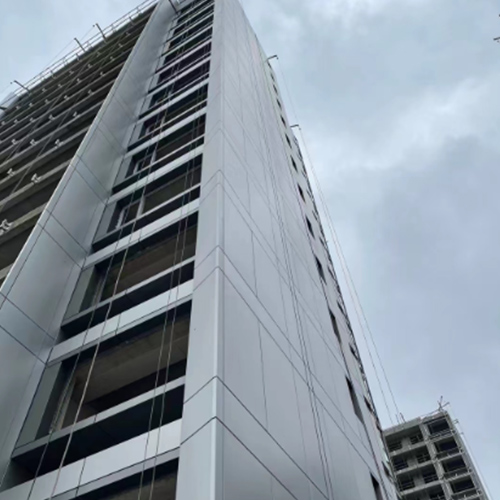
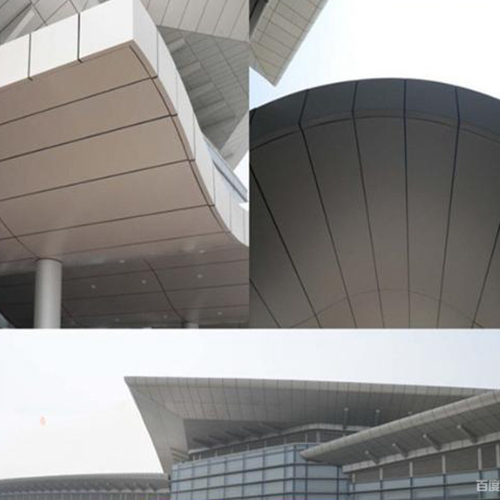
Core application scenarios: exterior walls of high-rise buildings and airport terminals.
Super High-Rise Residential Exterior Wall
Customization Service Introduction
Customization Scope
● Shape Customization: We support special shapes such as arcs and folded edges to meet architectural curved surface design requirements (e.g., stadium domes);
● Surface Treatment Customization: Fluorocarbon roller coating can be customized with unique color codes (color chart matching available);
● Insulation Customization: We adjust the insulation material and thickness based on the project's wind pressure and climatic conditions (e.g., high-density rock wool insulation is used in typhoon-prone areas).
Customization Process
01
The customer provides architectural drawings and design requirements (shape, color, and thermal performance), and our technical team performs structural calculations.
02
A 3D model and custom proposal are produced, along with detailed processing and cost information. A quote is provided within two business days.
03
After the customer confirms the proposal, a 50% down payment is made (an additional 10% down payment is required for custom designs), and the factory produces the mold.
04
Once the mold is completed, a first sample is produced. After customer acceptance, mass production begins (lead time: 12-18 business days).
05
Products undergo pre-shipment testing for wind resistance, weather resistance, and other performance tests. Upon passing these tests, they are delivered to the site, and installation technical support is provided.
The panel's innovative 3D core structure not only creates a striking visual depth for building façades, but also enhances overall structural rigidity. This dual advantage makes it suitable for both aesthetic expression and functional performance, giving architects and builders greater design freedom while supporting long-term safety and durability.
Beyond its strong internal bonding, the aluminium 3D core composite panel demonstrates excellent adhesion to metal surfaces, significantly expanding its range of applications. From exterior cladding and interior decoration to signage and other architectural uses, the panel is engineered to perform reliably across diverse environments.
Its lightweight construction simplifies handling and installation, helping to shorten construction schedules and reduce labour costs. At the same time, the corrosion-resistant aluminium surface ensures the panels maintain their original appearance and performance over many years, even under demanding weather conditions.
Sustainability is a key focus of aluminium 3D core composite panels. Their long service life, combined with the recyclability of aluminium, contributes to a lower environmental footprint and aligns with the increasing demand for environmentally responsible building materials.
In summary, aluminium 3D core composite panels represent a new generation of building solutions, balancing strength, visual impact, and sustainability. For architects, builders, and designers, this advanced panel technology opens up new possibilities for creating durable, visually compelling, and environmentally conscious structures.